


Understanding the Parts of a Floating Dock System and How It Anchors to Shore
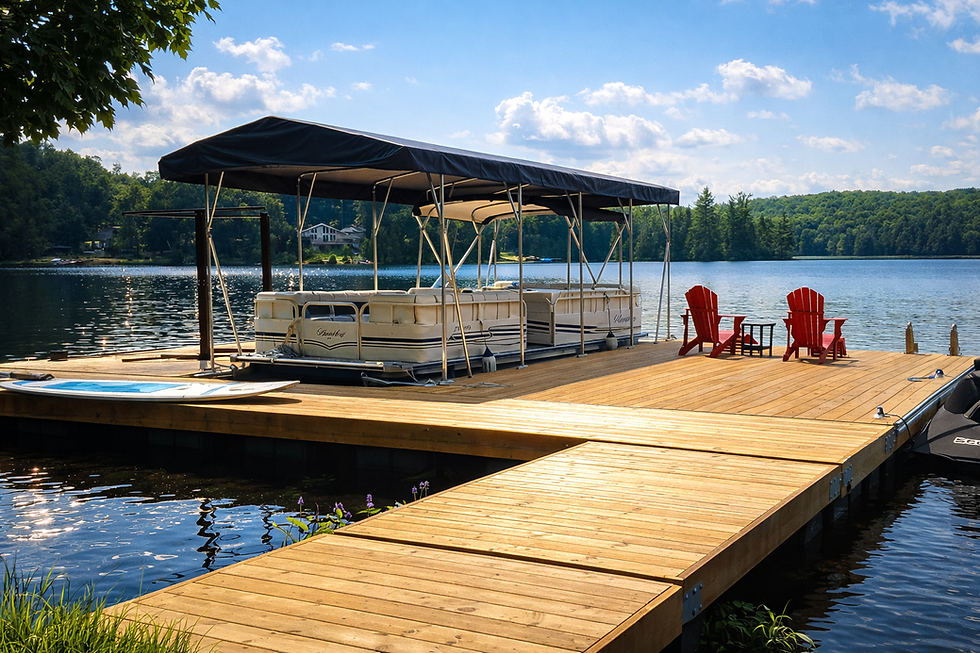
A floating dock system is more than just a platform on the water. It is a carefully engineered system designed to create safe, stable, and convenient access from shore to lake while keeping boats protected and organized.
Understanding how each part works together will help you design the right dock layout for your shoreline and ensure your dock performs well for years to come.
Why Choose Cottage Classic Docks Floating Docks?
Cottage Classic Docks floating docks are engineered for superior performance, durability, and all-season adaptability.
Key benefits include:
Lifetime Pontoon Warranty:
Assurance of long-term reliability and flotation performance.
Winter-Adaptive System:
Designed to withstand harsh winter conditions without damage.
Built to Last:
High-quality materials resist corrosion, UV damage, and wear.
Maintenance-Free Design:
No painting or staining required.
Customizable Modular Systems:
Configure your dock layout to fit almost any shoreline or waterfront property.
1. The Main Stage – The Floating Dock Platform
The floating dock is the primary platform where you walk, sit, swim, and access boats. It is the central gathering space of your waterfront.
Floating docks can be configured in many sizes and layouts depending on how the dock will be used. Some homeowners prefer a simple straight dock, while others choose large platforms or layouts that include boat slips, seating areas, and swim access.
The main dock is where most of your waterfront activity happens.
2. Flotation Supports / Dock Floats
Under every floating dock are the flotation supports that keep the dock level and stable on the water.
Cottage Classic Docks uses HDPE pontoons which provide superior flotation and durability. These pontoons resist leaks, punctures, and deterioration, making them ideal for long-term waterfront installations.
They are engineered for year-round durability and are backed by our Lifetime Pontoon Warranty.
Our flotation system also incorporates a Winter-Adaptive System, allowing the dock to remain in the water during harsh winter conditions without damage.
3. The Ramp – Connecting Shore to Dock
The ramp is the bridge between land and your floating dock system.
Because water levels naturally rise and fall throughout the season, the ramp allows the dock to move up and down while still maintaining a smooth and stable walking surface from shore.
Ramps are typically sized based on shoreline slope and distance from shore, ensuring safe and comfortable access.
4. Floating Dock Extensions / Gangways
Sometimes the shoreline is shallow, which means boats need deeper water farther away from shore.
Floating dock extensions, often called gangways, allow the dock system to reach deeper water where boats can safely moor.
These extensions are typically the same width as the ramp and can be built up to 32 feet long depending on site conditions.
They act as a transition section between shore access and the main dock platform.
5. Transition Plates / Gap Fillers
Floating docks require small gaps between sections to allow movement from waves and water level changes.
These gaps are typically around 6 inches and are an important part of the system's flexibility.
To make walking smoother, we can install transition plates or gap fillers that bridge the space between dock sections while still allowing the dock to flex naturally.
6. Dock Anchors
Anchoring keeps your floating dock positioned properly and prevents it from drifting due to wind, waves, or boat movement.
Cottage Classic Docks uses 335 lb or 500 lb anchor weights with marine-grade rope for reliable and secure anchoring.
Typical anchor configurations include:
2 anchors for a straight dock run
4 anchors for "T" or "L" shaped layouts
4 or more anchors for docks that are 16 to 24 feet wide
6 anchors or more for larger dock platforms
1 anchor per floating dock extension or gangway
Proper anchoring ensures the dock stays stable and aligned throughout the season.
7. Boat Slips
Boat slips help organize and protect boats around the dock system.
Instead of tying boats randomly along the dock, slips create designated spaces for each boat, making docking easier and reducing the risk of boats contacting each other.
Boat slips are especially helpful for families with multiple boats or for docks that host visiting boats.
8. Mooring Accessories
Accessories help keep boats secure and prevent damage during waves or windy conditions.
Common mooring accessories include:
Dock Bumpers
Protect boats and docks from contact damage.
Dock Cleats
Provide secure tie-down points for boats.
Each Cottage Classic Dock comes with a minimum of four premium flip-up dock cleats, giving you secure and convenient tie-off locations.
9. Decking
Decking is the walking surface of the dock and plays a major role in both appearance and durability.
Common decking options include:
Durable and cost-effective with a natural look.
A premium natural wood option with excellent aesthetics.
A high-end composite option that offers long life and minimal maintenance.
Quality decking provides traction, durability, and visual appeal for your waterfront space.
Make the Best Investment for Your Floating Dock
Understanding the parts of a floating dock system helps ensure you build a dock that works perfectly for your shoreline, boating needs, and waterfront lifestyle.
With Cottage Classic Docks floating docks, you get:
Industry-leading durability
Minimal maintenance
Innovative engineering like our Winter-Adaptive System
The security of a Lifetime Pontoon Warranty
The result is a dock system designed to provide safe, reliable waterfront access for many years.
If you would like help designing the perfect floating dock layout for your property, contact Cottage Classic Docks today and we will be happy to guide you through the process.


